










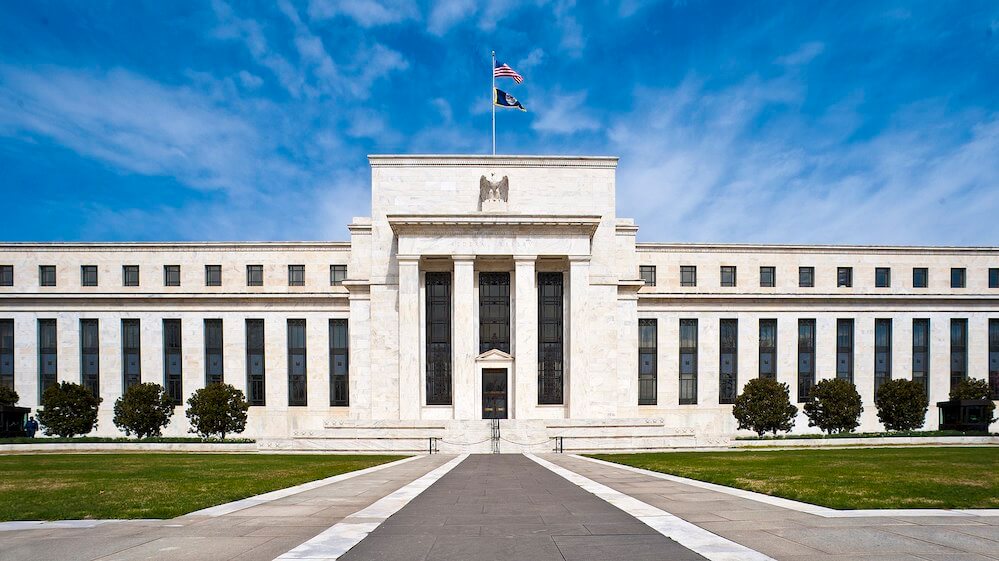
Although it had limited “available indicators” on which to base a decision, the Federal Open Market Committee voted Wednesday to trim the fed funds rate by quarter point to a range of 3.5% to 3.75%.
In its statement, the FOMC notes that “job gains have slowed this year, and the unemployment rate has edged up through September,” but that inflation continues to run above the committee’s 2% goal.
The committee was split in its decision: Voting for the monetary policy action were Jerome H. Powell, Chair; John C. Williams, Vice Chair; Michael S. Barr; Michelle W. Bowman; Susan M. Collins; Lisa D. Cook; Philip N. Jefferson; Alberto G. Musalem; and Christopher J. Waller.
Voting against the action were Stephen I. Miran, who preferred to lower the target range for the federal funds rate by half a percentage point, and Austan D. Goolsbee and Jeffrey R. Schmid, who preferred no change to the target range.
The split vote dims hope for future cuts in the short term.
“The FOMC voted to cut the federal funds rate target by another 25 basis points today, but the three dissents highlighted just how divided the committee is with respect to future rate cuts,” says Mike Fratantoni, senior vice president and chief economist for the Mortgage Bankers Association, in a statement. “As in the prior meeting, there were dissents on both sides of the decision, with Governor Miran voting for a 50-basis-point cut and two FOMC members voting for no change.”
“Inflation is well above the Fed’s target, but the job market appears to be softening, even as data to confirm that trend is still delayed due to the recent government shutdown,” Fratantoni says. “Thus, there is ammunition for both sides of the debate within the FOMC.”
“The projections published from this meeting show the committee does not see a clear path, with members indicating slightly faster growth, but similarly elevated inflation and a fed funds rate path that matches the September projections,” he says.
“The FOMC announced an end to quantitative tightening at its last meeting, which took effect on December 1,” he adds. “At this meeting, they announced that they will begin to add to their Treasury bill holdings, as needed, to sustain market liquidity.”
Selma Hepp, chief economist of Cotality, says although the fed is making decisions with limited data, “much data still points to a softening labor market and inflation that remains persistent, keeping prices high heading into the holiday season.”
“However, today’s move will do little to improve home affordability as prices remain strong and mortgage rates are unlikely to slip under the 6% mark for a 30-year mortgage, which will keep cautious first-time homebuyers on the sidelines, and overall home-buying activity seasonally slow until we come closer to the spring home buying season,” Hepp says, in a statement.
Photo: Public Domain
